Bespoke Mirror TVs: A Stylish and Functional Addition to Any Space
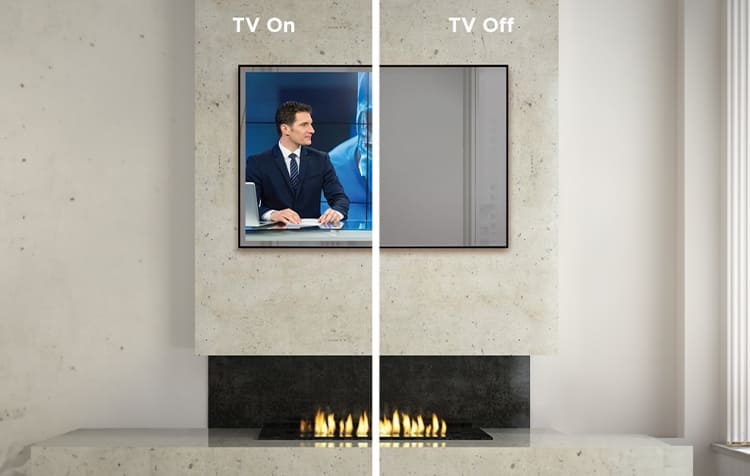
A blank mirror on the wall, until the moment you switch it on and it becomes a television: that's the appeal of a mirror TV in one sentence. But the products that actually deliver on that promise, versus the ones that look washed out and dim, come down to a few specific technical choices most buyers never think to ask about.
ME Integra's Bespoke Mirror TVs are built around getting those choices right from the start. Here's what actually makes a mirror TV work well, and what to check before choosing one for a home, hotel, restaurant or bar.
How a Mirror TV Actually Works
A mirror TV places a display panel behind a specialized two-way mirror glass, sometimes called dielectric or beam-splitter glass. This glass reflects like a normal mirror when the screen is off, but the panel's brightness overpowers the reflective coating once switched on, so the image becomes visible through the glass. Getting this right depends on matching the panel's brightness to the specific mirror coating in front of it, which is why purpose-built mirror TVs perform very differently from a standard TV with a mirror film added afterward.
Why Brightness Is the Detail Most People Miss
A standard consumer TV typically outputs around 140 to 200 nits of brightness. That's fine for a normal wall mount, but it usually isn't enough to punch through a mirror coating clearly. Purpose-built mirror TV panels run in the 400 to 1000+ nit range specifically calibrated for the mirror glass in front of them, which is exactly why a DIY mirror-film-over-a-regular-TV approach tends to produce a dim, low-contrast picture rather than a crisp one.
Waterproofing for Bathrooms and Wet Areas
For a bathroom, spa, or any humid installation, IP65 is generally the practical minimum, with IP66 offering stronger protection against steam and direct splashes. The right rating depends on placement: a vanity-facing mirror TV sees far less direct water exposure than one installed close to a shower or tub, so the rating should match the actual installation, not just the room type.
Placement and Viewing Angle
Mirror glass reduces viewing angle and visibility compared to a standard screen, so placement matters more here than with a normal TV. A vanity-facing unit only needs to look good from close range, while a tub-facing installation needs a wider effective viewing angle for someone reclining at a distance, and a living room or bar installation needs to hold up under normal ambient room lighting rather than the controlled brightness of a showroom.
Choosing the Right Mirror TV
Beyond brightness and waterproofing, a few practical decisions shape how well a bespoke mirror TV fits a space:
Size: Match the screen size to the viewing distance and the space available. A vanity mirror and a living room feature wall call for very different proportions, and getting this wrong is one of the most common regrets after installation.
Shape: Bespoke mirror TVs come in rectangles, squares, and circles, and in fully custom shapes when needed. Choose one that complements the existing decor rather than defaulting to the standard rectangle.
Frame: Frames in wood, metal, or minimalist frameless designs each read differently depending on the room. The frame has a bigger visual impact than most buyers expect, since it's the only part of the unit visible at all times.
Resolution and smart features: 1080p is the practical minimum for clear picture quality through mirror glass; 4K holds up better in larger installations or where the screen sits at a shorter viewing distance. Built-in smart TV platforms and streaming app support matter more once the unit is behind a wall-mounted mirror, since swapping out a streaming device later isn't as simple as it would be with a standard TV.
A bespoke mirror TV is a design choice as much as a technology one. Getting the brightness, waterproof rating, and placement right is what separates a mirror TV that becomes a genuine feature of the room from one that looks impressive switched off and disappointing switched on.
For an elegant, practical way to bring a television into a home or business space, explore ME Integra's Bespoke Mirror TV solutions, or reach out directly. Phone: +971 50 3700928. Email: info@meintegra.ae.
Frequently Asked Questions
Recent Post
The Revolutionary Air-Powered Solution...

Home and Building Automation in Dubai...